
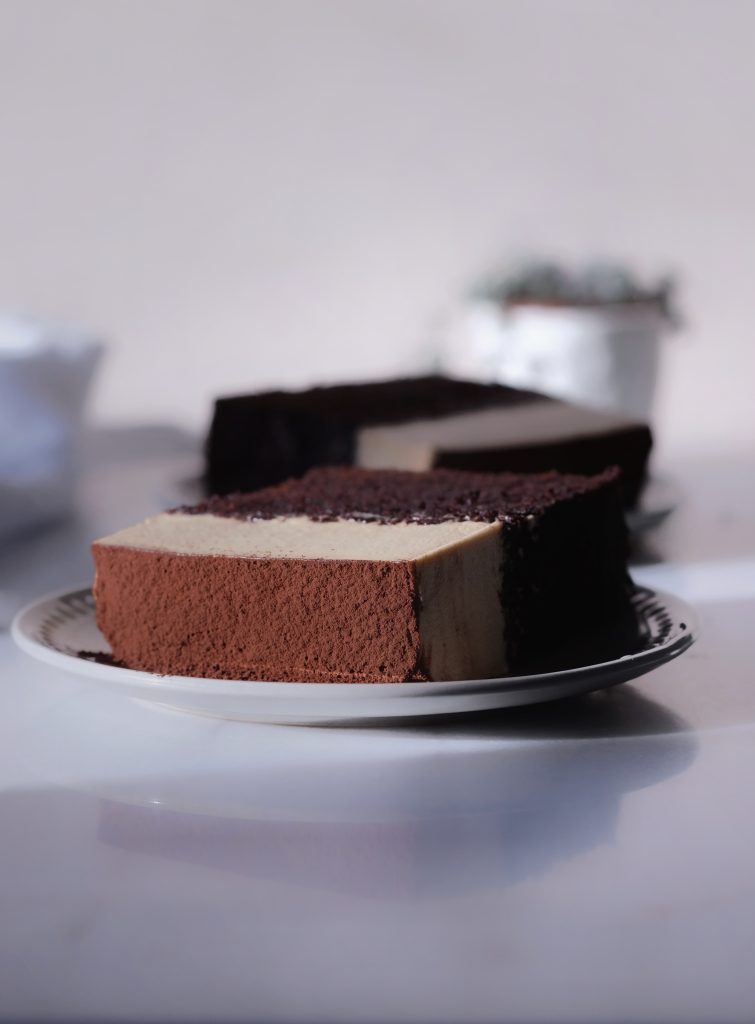
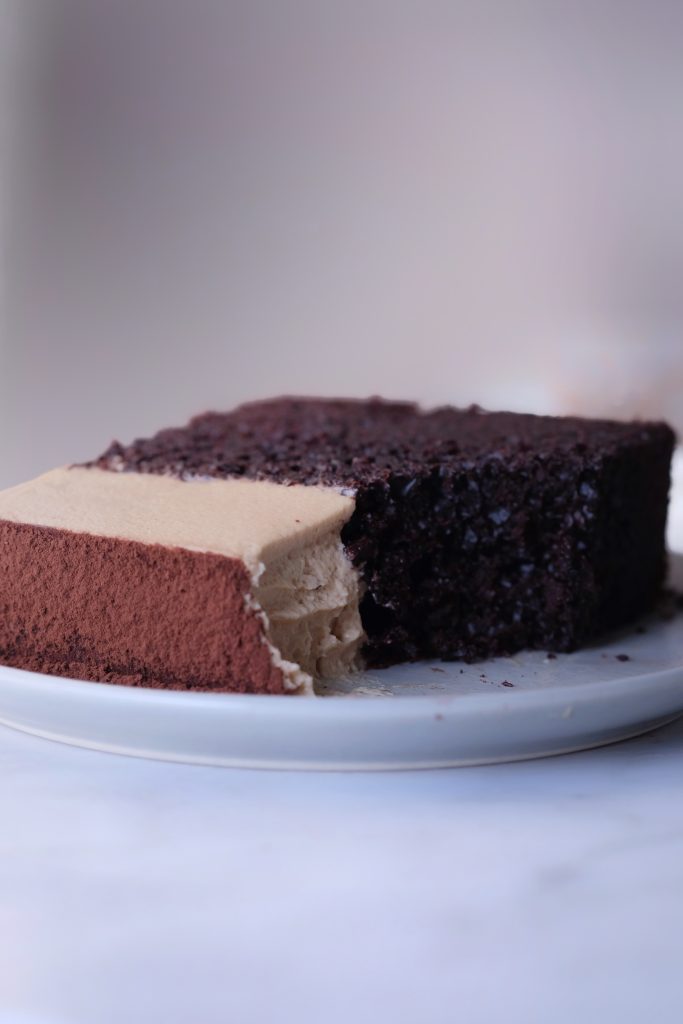
This chocolate cake features an incredibly moist and fudgy crumb that pairs perfectly with the creamiest and dreamiest coffee mascarpone cream. It’s an easy recipe to make that guarantees to impress your friends and family. Below, you’ll find detailed guidance and valuable tips to help you succeed.
Ingredients You’ll Need for Chocolate Cake & Why It Works:
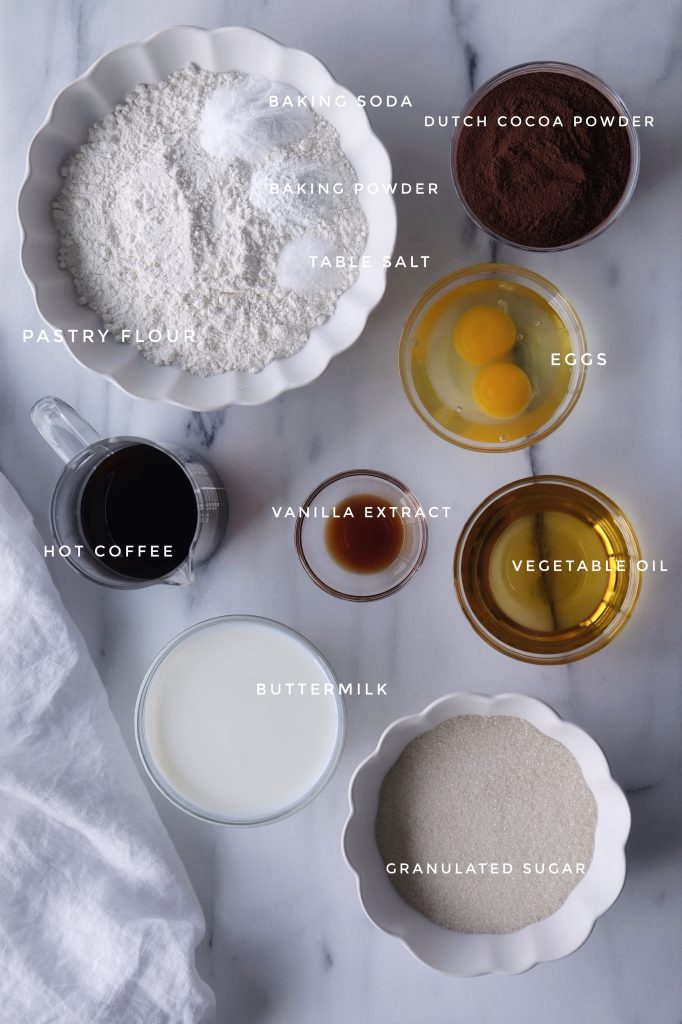
Pastry Flour: Pastry flour is an ideal choice for this recipe because of its lower protein levels, typically ranging around 7-9%. This amount of protein gives the cake its light and airy crumb while also providing structural integrity. If pastry flour isn’t available, cake flour can be used as a substitute.
Granulated Sugar: Sugar possesses many beneficial baking properties, such as its ability to attract and bond with water, ultimately pulling moisture from proteins and starches. This process results in a thinner batter, which bakes into a delightfully soft and moist crumb. Additionally, sugar is a natural preservative, so it helps prevent the cake from staling too quickly and adds that pleasing sweet taste we all love.
Eggs: Eggs, a natural emulsifier, serve dual functions in this recipe. Egg yolks are rich in lecithin, which helps bind fats and liquids together in the cake. While egg whites are packed with protein that undergoes a process called “protein aggregation” during baking. This process causes the proteins to unravel and solidify, forming a flexible network that captures water and other liquids, essentially providing the cake with its structure. Consequently, the yolks and protein in eggs each play their own unique role in ensuring the cake transforms into a cohesive and flavorful final product.
Cocoa Powder: Dutch-processed cocoa powder is a great addition to this recipe. This variety of cocoa has undergone a process involving a mild alkali agent like sodium or potassium bicarbonate to reduce the cocoa’s acidity. As a result, the cocoa’s acidity becomes neutral, imparting a smoother, richer, and fuller-bodied flavor to the cake.
Baking Powder & Baking Soda: Baking soda and baking powder share a common ingredient — sodium bicarbonate, a base. However, what sets baking powder apart is that it also contains an acid, typically monocalcium phosphate (MCP) or cream of tartar. When mixed with water from a wet batter, the base and acid react almost instantly, producing carbon dioxide bubbles that give cake batter its rise and delicate texture. Additionally, combining both leaveners helps neutralize the cake’s acidity, in this case from the acidic buttermilk and hot coffee, increasing the overall pH and rendering the batter more alkaline.
Salt: Adding a pinch of salt to your cake batter adds depth and complexity while also harmonizing the other flavors.
Buttermilk: Due to its 90% water content and high acidity level, around 4.8, buttermilk serves a few purposes in this cake. Firstly, the water content helps to provide moisture to the crumb in the form of steam during baking. At the same time, the acidity in buttermilk works with the chemical leaveners to give the cake its rise. Additionally, buttermilk’s acidity also helps to balance out the baking soda by removing any metallic taste that may occur.
Vegetable Oil: Vegetable oil is a type of unsaturated fat that can favorably impact the texture of your cake. When oil is added to the batter, due to its liquid state, it blends seamlessly into the cake batter, saturating the flour particles and egg proteins, resulting in a moist crumb. When choosing a vegetable oil, opt for a neutral one, such as avocado oil, so the oil won’t impart flavor to the cake.
Vanilla Extract: The key to creating a delicious and well-balanced cake lies in using high-quality vanilla extract. It enhances the flavor nuances of the other ingredients, creating a more harmonious overall flavor.
Hot Coffee: Incorporating hot coffee into the cake batter is essential in bringing out the rich cocoa flavor in the cake. This technique, known as blooming, involves pouring hot liquid, like coffee, over cocoa powder to activate its flavor. In this case, once the hot coffee is poured and whisked into the batter, the solid cocoa particles dissolve, further releasing and intensifying its chocolate notes. Additionally, the acidic coffee reacts with the baking soda and baking powder to further leaven the cake.
Ingredients You’ll Need for Coffee Mascarpone Cream & Why It Works:
Coffee Mascarpone Cream —
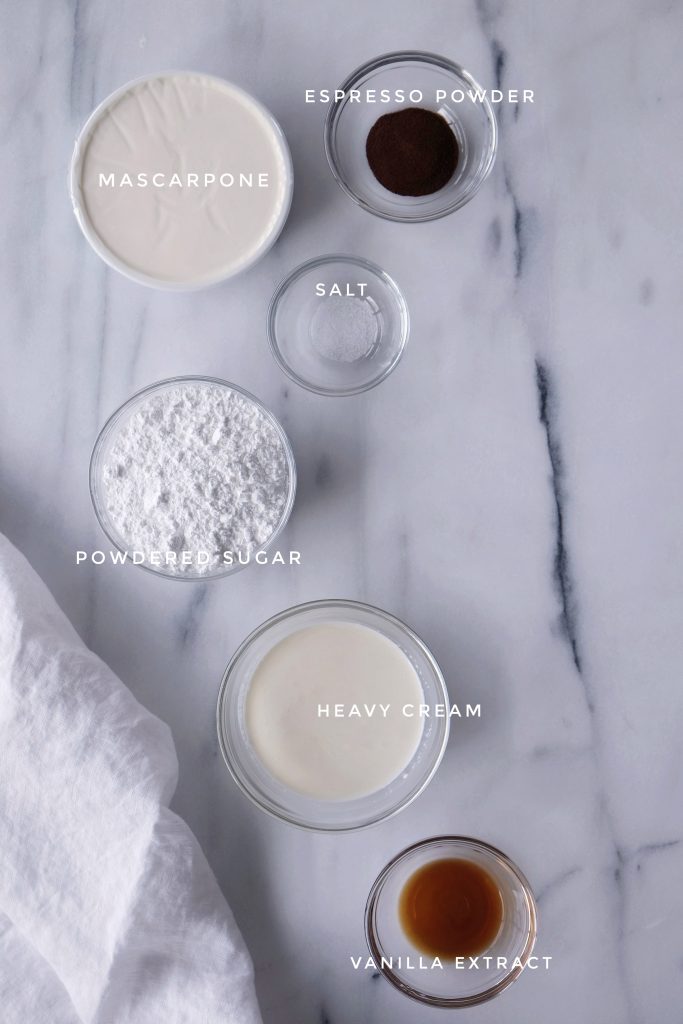
Mascarpone: Mascarpone is an Italian cream cheese that is smoother in texture and has a milder taste. For this reason, it complements well with bold flavors, such as coffee. When sourcing for a mascarpone, opt for a thick and creamy variety with brands such as Galbani and BelGioioso, which are ideal for whipping into a thick cream.
Heavy Cream: Heavy cream’s high-fat content makes it excellent for whipping and aerating into a luxuriously thick cream that adds extra creaminess and volume to the mascarpone cream.
Powdered Sugar: Powdered sugar is used to add sweetness and help thicken the cream.
Espresso Powder: Espresso powder is essentially finely ground espresso beans that have undergone a drying and brewing process. Adding one teaspoon of espresso powder to this mascarpone cream imparts a delightful coffee flavor.
Vanilla Extract: Vanilla extract helps to balance and enhance the other flavor nuances in this mascarpone cream.
Salt: Salt can improve the taste of this coffee mascarpone cream by bringing balance to its sweetness and other flavor components. I decided to test the effectiveness of salt by whipping up two test batches: one without salt and one with salt. The first batch didn’t have salt, which yielded a cream that tasted overly cloying and one-dimensional. However, the second batch, in which I added salt, tasted noticeably better. The espresso flavors were more prominent and bold, and the cream was much more enjoyable overall.
Tips for making Chocolate Cake with Coffee Mascarpone Cream:
Don’t Overmix Batter — Be cautious not to overmix the batter. Excessive mixing introduces too much air into the batter, which then expands and ultimately deflates in the oven, resulting in a dense cake. It’s best to whisk the dry and wet ingredients until they are just combined, and then give the batter a few quick stirs to ensure it has been mixed thoroughly. Whether using a stand mixer or mixing by hand, the key is to avoid overmixing.
Baking Time Variability — Through several test batches and unsuccessful attempts, I have discovered the importance of giving your cake sufficient time to bake. Sometimes, the cake may appear fully baked, but it becomes apparent that its structure has not been fully set after taking it out of the oven, and the cake sinks inward as it cools. To prevent your cake from collapsing, here are some ways to determine if your cake has finished baking:
1.) Closely monitor the cake’s progress towards the end of the baking process, as baking times may vary by 5-10 minutes.
2.) The cake will begin to have a pleasant aroma.
3.) The cake will slightly pull away from the pan.
4.) The cake will spring back when gently pressed.
5.) Clean toothpick or, in this case, bamboo skewer since it’s a loaf cake when inserted.
6.) Another option is to use a food thermometer to check the cake’s internal temperature. It is likely done once the cake reaches a temperature of approximately 200℉ to 210℉.
Cool Cake Completely — To ensure the coffee mascarpone cream stays in place and doesn’t melt or slide off the cake, let it cool completely before piping it onto it.
Piping Bag & Tip — To apply the cream more easily to the top of the cake, transfer the coffee mascarpone cream into a piping bag and use the piping tip of your choice. This method will help achieve a uniform layer of cream.
Chill the Cream — After preparing your coffee mascarpone cream, refrigerate it for at least 30 minutes. This is essential as the cream will firm up, making it easier to pipe onto the cake.
Offset Spatula — An offset spatula is the best tool for achieving straight, angular lines, especially once the cream has been piped onto the cake.
Dusting of Cocoa Powder — A generous final dusting of cocoa powder on top of the cake really brings the cake flavors together, as cocoa is the perfect companion to coffee. It enhances the cocoa in the cake and the espresso powder in the mascarpone cream. The flavors all meld together, creating a perfect bite.
Step by Step Instructions — Chocolate Cake:
1. Preheat oven to 350℉. Whisk together all-purpose flour, granulated sugar, cocoa powder, baking powder, baking soda, and salt in a mixing bowl (photo 1).
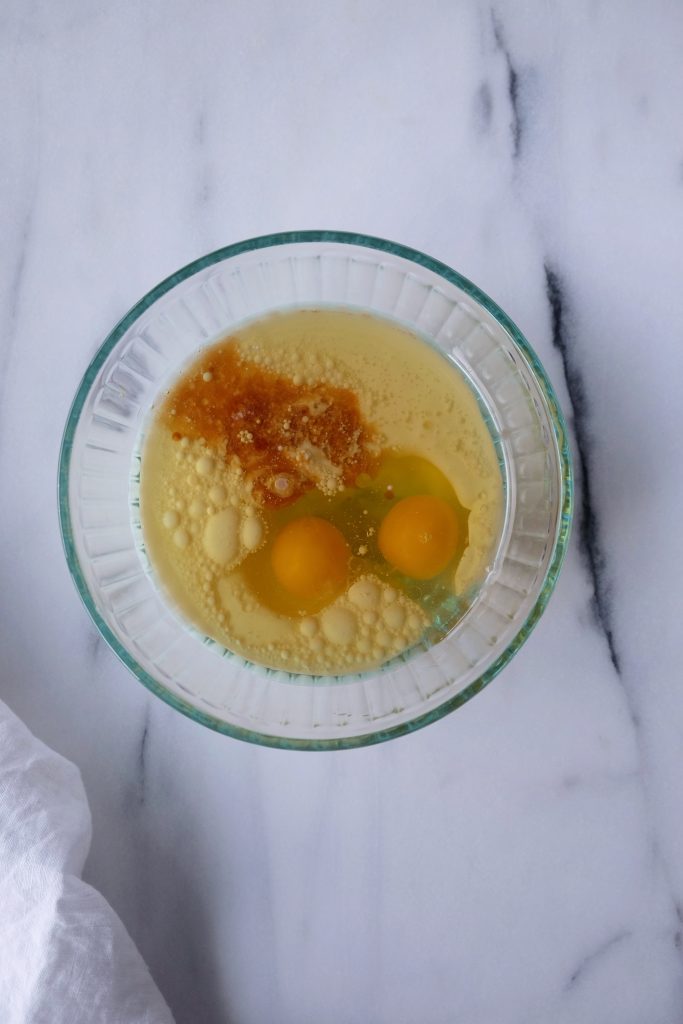
2. In a separate bowl, add buttermilk, vegetable oil, eggs, & vanilla extract (photo 2).
3. Whisk buttermilk mixture until combined (photo 3).

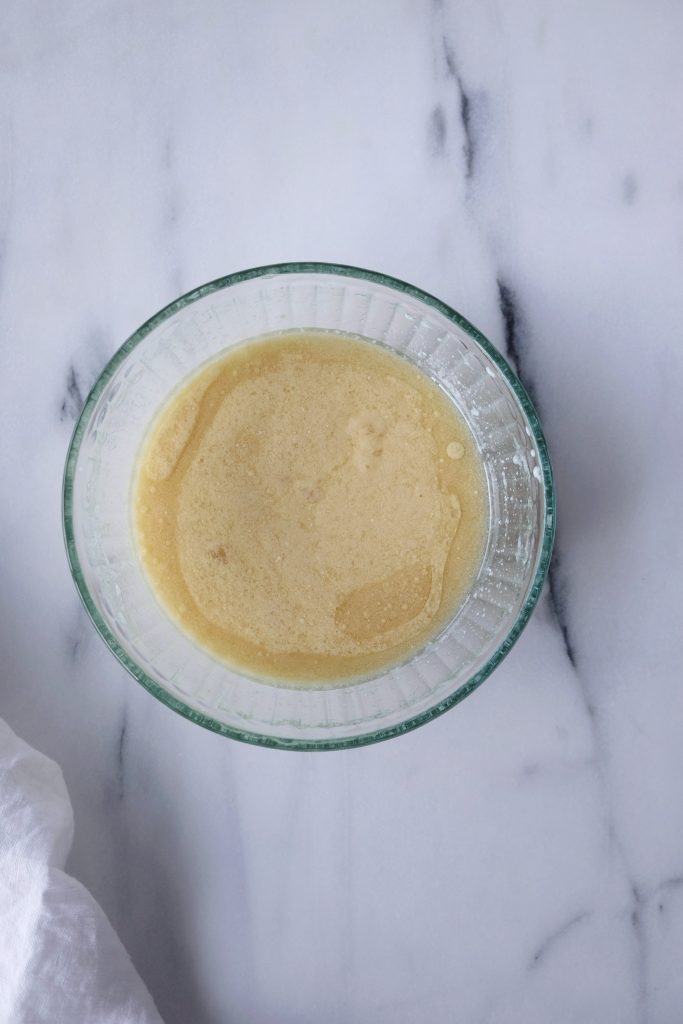
4. Next, pour buttermilk mixture into the bowl of dry ingredients (photo 4).
5. Using a whisk or rubber spatula, fold/whisk batter until combined; stop immediately once flour is no longer visible (photo 5).
6. Add hot coffee. Whisk until homogeneous. Batter will be thin. Don’t overmix (photo 6).


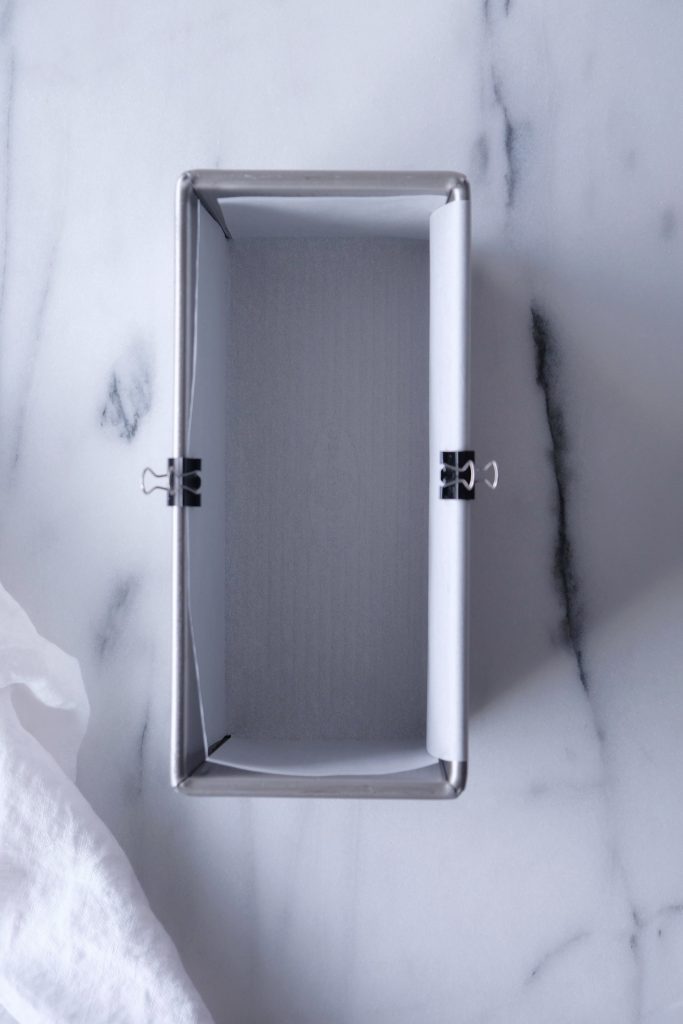
7. Line 9 x 4″ loaf pan with parchment paper (photo 7).
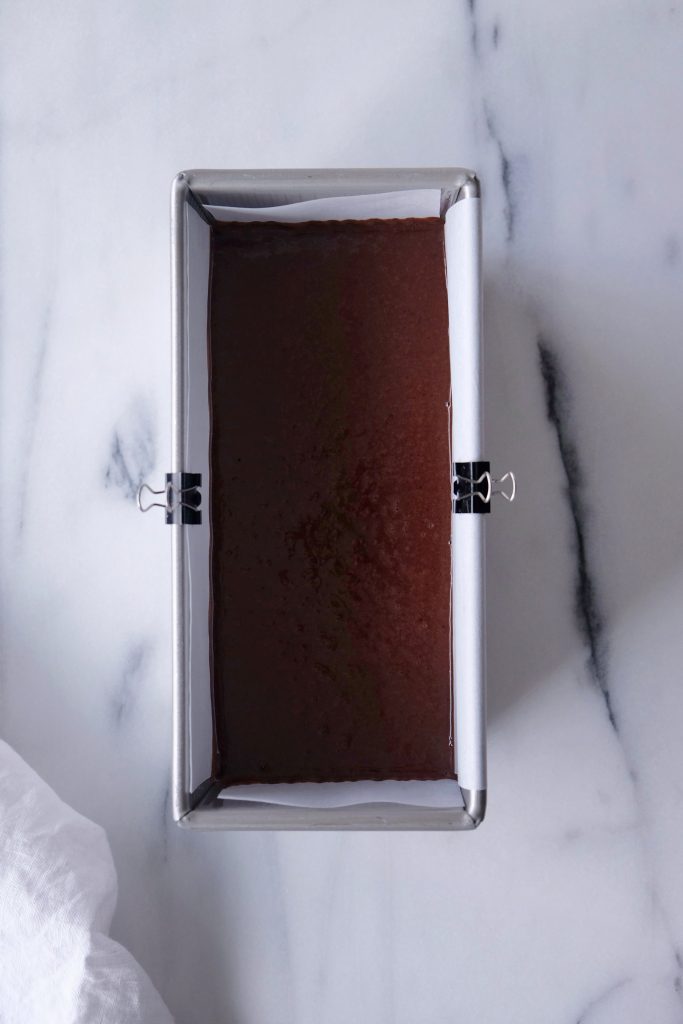
8. Pour cake batter into the pan. Bake for 1 hour (photo 8).
9. Allow cake to cool completely before piping on the coffee mascarpone cream (photo 9).

Does using hot coffee affect the crumb texture and taste of the cake in the final product?
After conducting several test batches, I’ve discovered that hot coffee is the way to go if you want to improve the taste and texture of your cake. Compared to cold coffee, hot coffee reacts with the baking powder and baking soda instantly and more thoroughly, producing more rise in the batter. This is especially true for “double-acting” baking powders, which produce a second rise when heat is applied. These baking powders get their second rise from a slow-acting acid that activates at high temperatures. Depending on the brand, this slow-acting acid can be found in its ingredient list (e.g., sodium aluminum sulfate, sodium aluminum phosphate, sodium acid pyrophosphate) – or – interestingly enough, by a slow-acting acid created from the fast-acting acid during those first minutes of mixing (e.g., slow-acting dicalcium phosphate created from fast-acting MCP). Both the first and second reactions produce carbon dioxide, which is essential for cakes to rise.
Storing & Freezing Information for Chocolate Cake with Coffee Mascarpone Cream:
Storing — This cake will remain fresh for about a week when properly wrapped and stored in the refrigerator.
Freezing — Chocolate cake can be frozen without the mascarpone coffee cream for up to three months. Wrap the cake in plastic wrap, followed by a layer of foil, and place it in the freezer. When ready to enjoy it, transfer the cake to the refrigerator and let it thaw overnight. An hour before serving, make the coffee mascarpone cream and follow the instructions in the recipe on how to pipe the cream onto the cake.
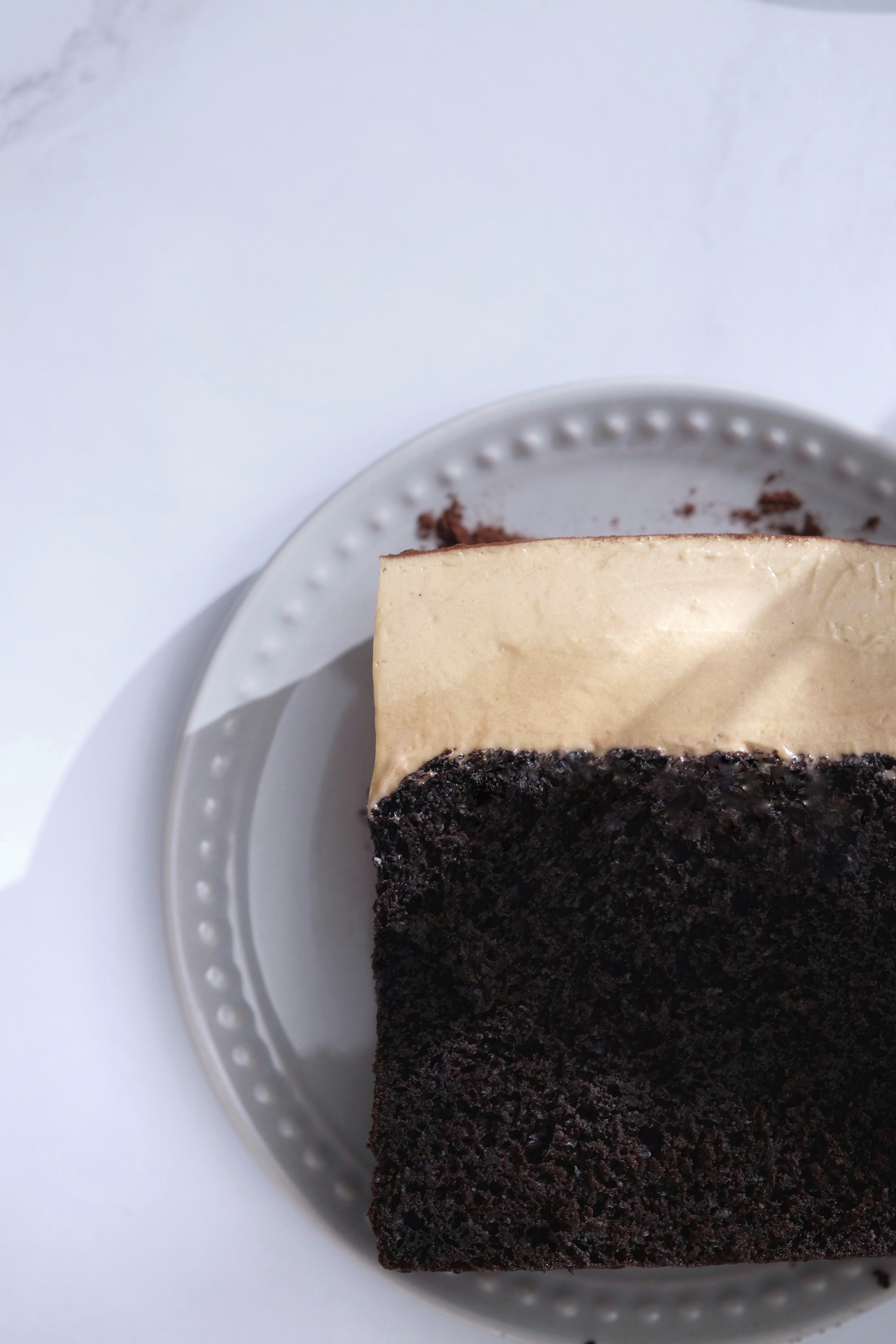
Chocolate Cake with Coffee Mascarpone Cream
Equipment
- Hand mixer
- 2 Mixing bowls
- 9"x4" Loaf pan
Ingredients
Chocolate Cake:
- 220 g pastry flour
- 200 g granulated sugar
- 65 g Dutch processed cocoa powder
- 1 tsp baking powder
- 2 tsp baking soda
- 1 tsp salt
- 220 ml (1 cup) buttermilk cold
- 110 ml vegetable oil
- 2 large eggs room temperture
- 1 tsp vanilla extract
- 220 ml (1 cup) hot strong coffee
Coffee Mascarpone Cream:
- 240 g mascarpone cold
- 150 ml heavy whipping cream cold
- 150 g powdered sugar
- 1 tsp vanilla extract
- 1 tsp espresso powder
- ¼ tsp table salt
Instructions
Chocolate Cake —
- Preheat the oven to 350°F (180°C). Grease and line a 9 x 4" loaf pan with parchment paper. Set aside. In a mixing bowl, whisk together all-purpose flour, granulated sugar, cocoa powder, baking powder, baking soda, and salt.
- In a separate bowl, whisk together buttermilk, oil, eggs, and vanilla extract until combined. Next, add the dry ingredients. Whisk again until just combined. Batter should be thicker at this point.
- Add hot coffee to the batter and whisk briefly until combined; the batter should have thinned out. Pour cake batter into the prepared loaf pan. Bake the cake for approximately 1 hour. Once the cake is finished baking, remove it from the oven and allow it to cool completely before applying coffee mascarpone cream.
Coffee Mascarpone Cream —
- Using a hand mixer fitted with the whisk attachment, beat mascarpone and heavy cream at medium speed until smooth and slightly doubled in volume, for about 2-3 minutes.
- Next, add powdered sugar, espresso powder, salt, and vanilla extract. Whisk cream at medium speed for another 2-3 minutes until thick and creamy. Be careful not to over-whisk, or the cream will curdle. Transfer cream to a piping bag with a round piping tip. Chill cream in the fridge for at least 30 minutes before use.
Cake Assembly —
- To assemble the cake, carefully remove the top dome of the cake using a serrated knife. This helps when applying a flat layer of cream.
- Next, pipe an even layer of coffee mascarpone cream onto the top of the cake. Using an offset spatula, smooth out the cream to form a rectangular shape similar to the loaf pan. Chill the cake in the fridge for 1 hour. Using a serrated knife, gently trim the very edges of the sides of the cake so the cream and cake line up exactly. Dust a generous amount of cocoa powder on the top of the cake.
- Before serving, run your knife under hot water and dry the knife on a kitchen towel. This will help to get cleaner cuts. Repeat this step after each cut.


Leave a Reply