
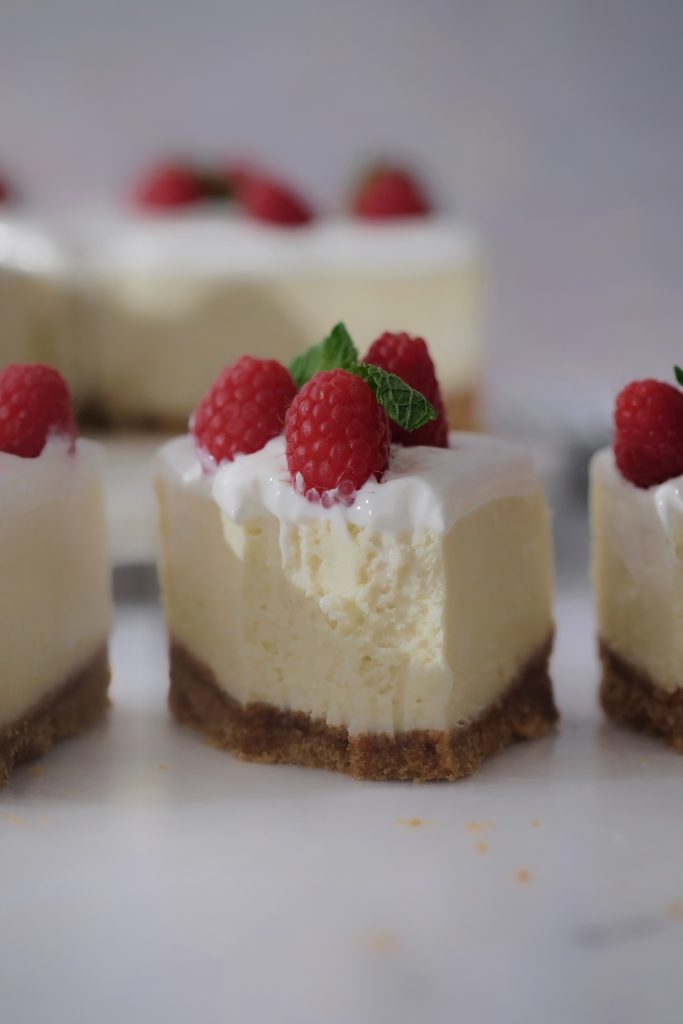
What could be more delightful than a classic New York cheesecake? How about a classic New York cheesecake with velvety sour cream topping? This cheesecake has everything you need. It’s rich, dense, slightly tangy, and incredibly creamy. The best part is the perfect cheesecake-to-crust ratio. You can make this cheesecake with helpful tips and tricks included in this post, just like those in a New York bakery. I’m sure it’ll definitely be a crowd-pleaser!

Ingredients You’ll Need & Why It Works:
Crust —
Graham Crackers: Graham crackers, a well-known American classic, are available in popular flavors like honey and cinnamon. They are a common ingredient in the preparation of cheesecake crusts. I found graham crackers work best in this recipe, yielding a crust that imparts subtle honey sweetness for this cheesecake.
Light Brown Sugar: Light brown sugar adds a distinct molasses flavor and helps moisten the crust.
Unsalted Butter: Six tablespoons of melted butter was ideal for binding the ground honey graham crackers into a crust.
Table Salt: Salt helps balance and intensify the various flavors in the crust.
Cheesecake Filling —
Cream Cheese: Commercially produced cream cheese typically contains pasteurized milk, cream, cheese culture, and a type of stabilizer or thickener (such as locust bean gum, xanthan gum, guar gum, or carob bean gum) in its ingredient list. For optimal results, when selecting cream cheese, ensure that it includes a stabilizer or thickener in its ingredients and be sure it’s in block form. These additives contribute to the thicker texture of the cream cheese, which is essential, as the absence of these stabilizing agents may result in excess moisture and improper setting of the cheesecake.
Eggs: Egg yolks are an excellent natural emulsifier, as they contain a high amount of lecithin. This compound is essential in binding fats and liquids together in the cheesecake. Egg whites, on the other hand, are comprised primarily of protein and water, which provides structure to the cheesecake and helps it to set. Essentially, these two components work in tandem to create a cheesecake rich in flavor and texture.
Granulated Sugar: Like all baked goods, sugar is essential for maintaining a soft and tender texture. That’s because sugar attracts and bonds with water, eventually drawing moisture from proteins and starches, resulting in a thinner batter and a soft cheesecake.
Vanilla Extract: High-quality vanilla extract is essential for a well-balanced and flavorful cheesecake. It enhances the flavor nuances of the other ingredients, making the experience more enjoyable.
Table Salt: Including a small amount of salt can greatly enhance the taste of your cheesecake by bringing out the flavors of the other ingredients. Omitting the salt would result in a cake that lacks depth and balance.
Cornstarch: Adding cornstarch to the cheesecake batter serves a dual purpose in ensuring the cake’s structural integrity and texture. Cornstarch functions as a stabilizer, reducing the likelihood of cracking while also thickening the cheesecake filling to create a firmer, more cohesive final product. These attributes are especially valuable when slicing the cheesecake, as the firmer texture facilitates cleaner, more precise cuts.
Lemon Juice: Lemon juice is key when making this cheesecake. Firstly, it interacts with the fat proteins in the cream cheese, assisting in the coagulation process of thickening the cheesecake. Additionally, the tanginess and tartness of the lemon juice counterbalance the richness of the cream cheese.
Sour Cream: Sour cream contains approximately 74% water and has an acidity of 4.5. The water content in sour cream helps to add moisture and makes the batter less dense, resulting in a soft-textured cheesecake. The sour cream’s acidity also contributes to its tanginess, which helps balance the rich cream cheese.
Sour Cream Topping —
Sour Cream: Full-fat sour cream works best here. However, low-fat sour cream can also be used as a substitute.
Powdered Sugar: Powdered sugar typically contains around 3% cornstarch or tapioca starch. The regular variety has cornstarch, while the organic variety has tapioca. These starches are added to absorb moisture and prevent clumping in the powdered sugar. However, cornstarch and tapioca also have thickening properties, so adding powdered sugar to the sour cream helps make it thicker and sweeter.
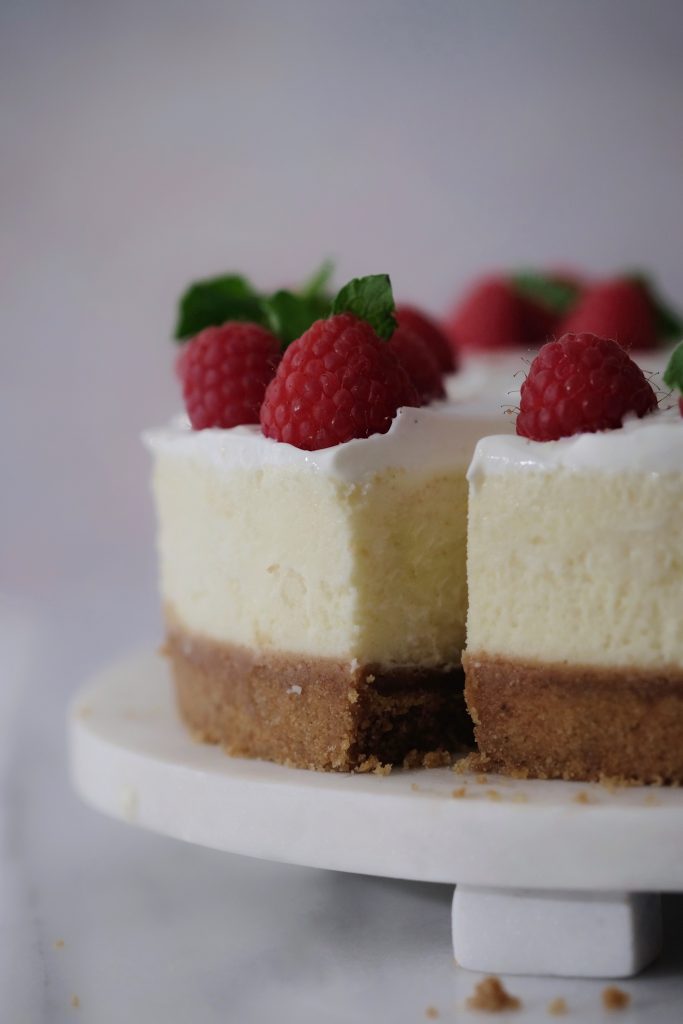
Tips for Making New York Cheesecake w/ Sour Cream Topping:
Water Bath — This recipe requires a bain marie, a water bath. The steam generated from the water bath will cook the custard slowly and evenly, helping to prevent the custard from curdling, burning, and/or cracking. After many test iterations, I found that hot water builds steam quickly best.
Slow & Low Heat — The best way to ensure a successful cheesecake baking process is to gently bake it at a lower heat setting for an extended period. This technique also helps to prevent the cheesecake from curdling, cracking, and/or forming bubbles. While this method may require a longer baking time, it is undoubtedly worth the effort.
Air Bubbles & Cracks — To avoid the formation of air bubbles on top of the cheesecake, gently whisk the batter after adding in the eggs. Once the cheesecake batter has been poured into the springform pan, gently tap the pan against the counter 3-4 times to eliminate any bubbles. To further remove trapped air bubbles, gently rotate the pan back and forth with both hands holding the sides of the pan. By doing so, any trapped air bubbles in the batter will rise to the surface and disperse. This step ensures the cheesecake is free of as many air bubbles as possible before baking.
Prevent Soggy Crust — A fail-proof technique to prevent the cheesecake’s crust from becoming soggy involves placing a deep baking tray of hot water onto the oven’s bottom rack directly below the cheesecake. This method ensures that the condensation from the steam accumulates less in the foil than if the cheesecake was submerged directly in the water bath. This simple step guarantees perfect results every time.
Do Not Open The Oven — As tempting as it may be, refrain from opening the oven door when the cheesecake is baking, despite the temptation to do so. This action could drastically change the oven temperature, leading to the cheesecake’s sinking and/or cracking.
Cooling Cheesecake — After adding the layer of sour cream, allow the cheesecake to cool in the oven for 30 minutes with the door slightly left open. The residual heat will continue to bake the cheesecake gently while preventing possible cracking due to abrupt temperature fluctuations. Once removed from the oven, allow the cheesecake to cool to room temperature before chilling in the fridge overnight. The overnight chill is essential to achieving the luxurious, silky-smooth texture of the cheesecake.

Step By Step Instructions — New York Cheesecake w/ Sour Cream Topping:
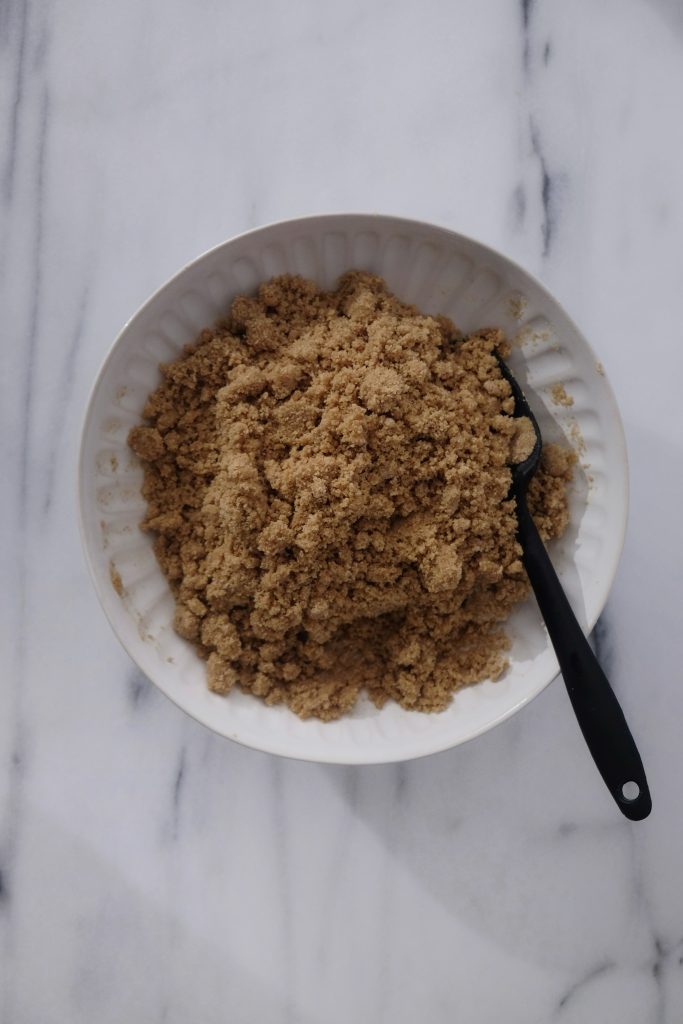
To Make The Crust — Preheat the oven to 325°F. Ground graham crackers into a fine crumb using a food processor. Pour crumbs into a medium-sized bowl and whisk together with brown sugar and salt. Add melted butter and mix until combined (photo 1 & 2). Pour crumbs into the prepared springform pan (photo 3). Using the bottom of a small glass cup or a metal measuring cup, tamp down onto the crumbs, creating an even layer. Chill the crust in the fridge while you make the cheesecake batter.


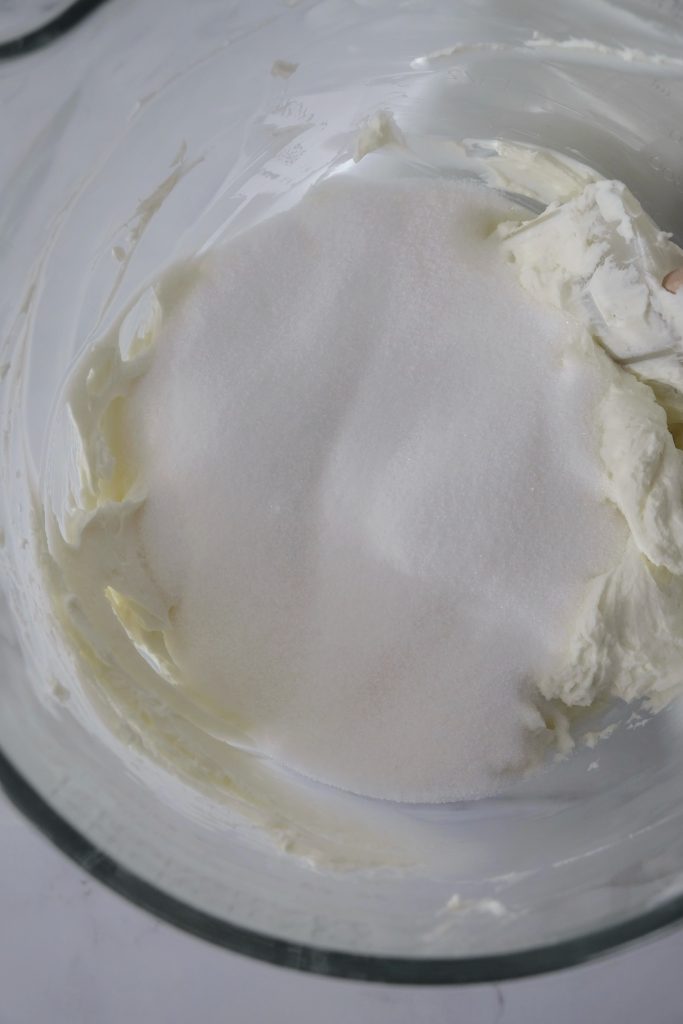
To Make The Cheesecake — Beat softened cream cheese and sugar until smooth and creamy, a few minutes, on low, ensuring no lumps (photo 4 & 5). Scrape the sides and bottom of the bowl to ensure it’s mixed thoroughly. Next, add vanilla extract, salt, lemon juice, and cornstarch (photo 6). Continue to beat on low until combined.


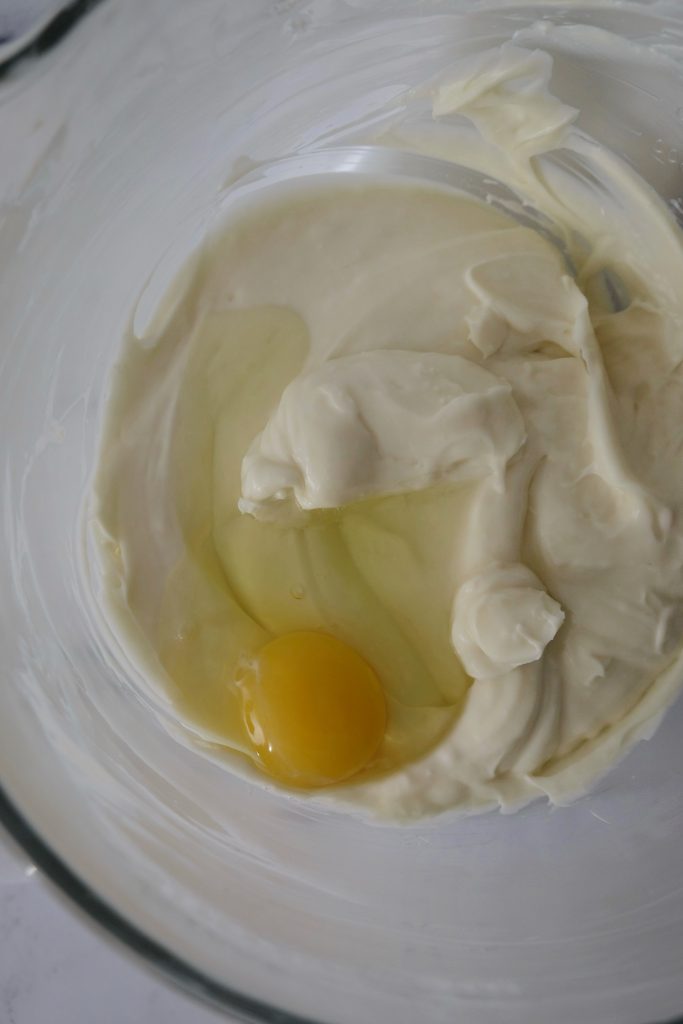
Next, add eggs one at a time and gently mix on low (photo 7). Fold in the sour cream, ensuring not to over mix the batter (photo 8). The batter should be smooth (photo 9).
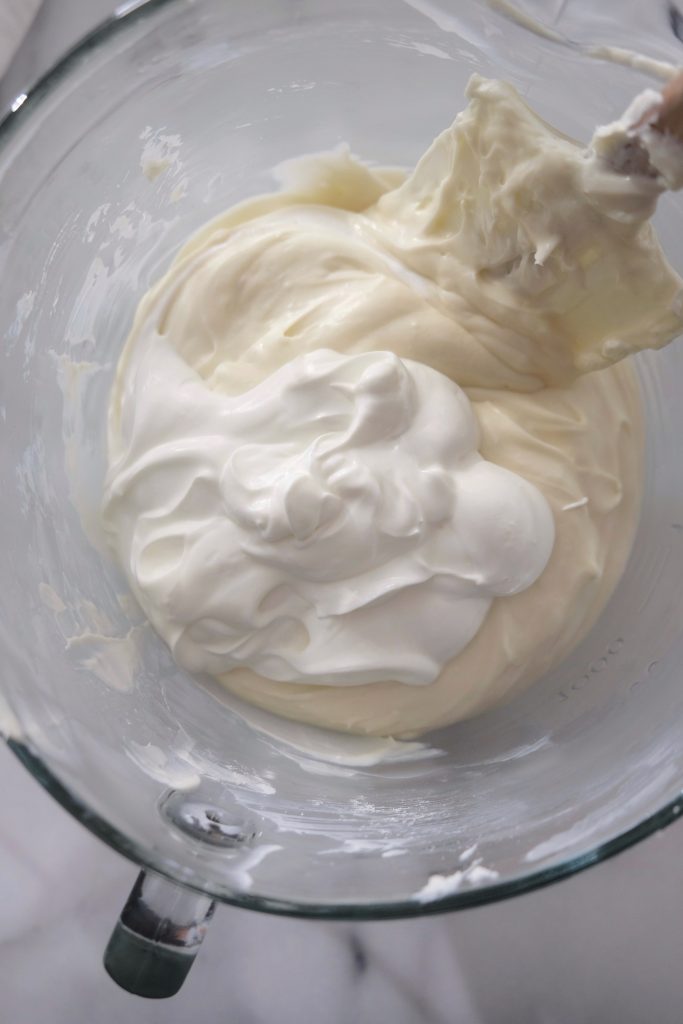

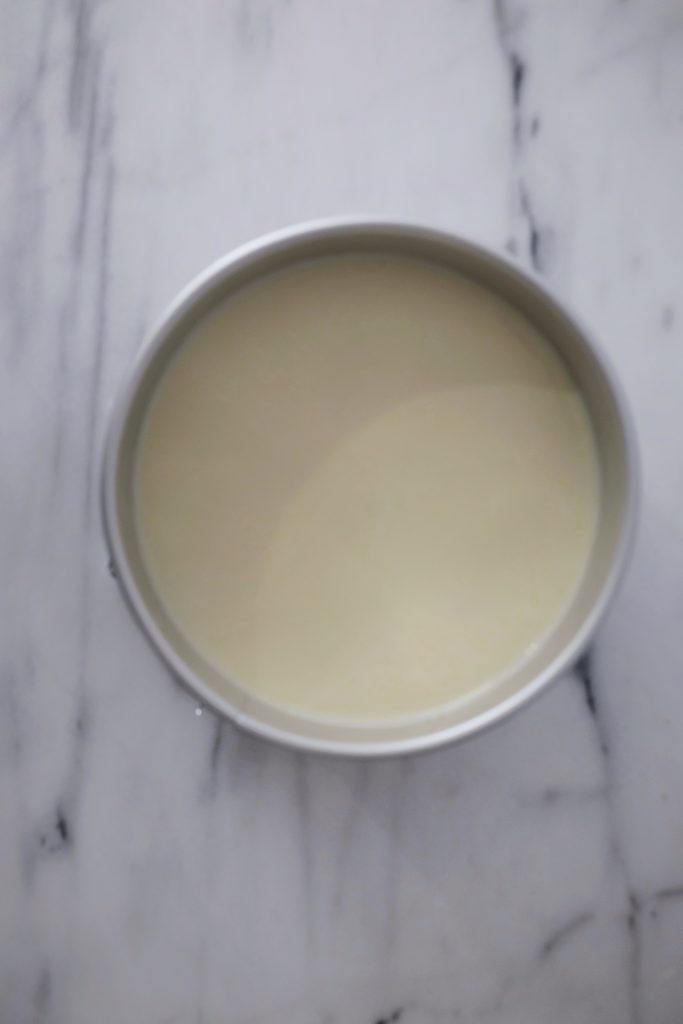
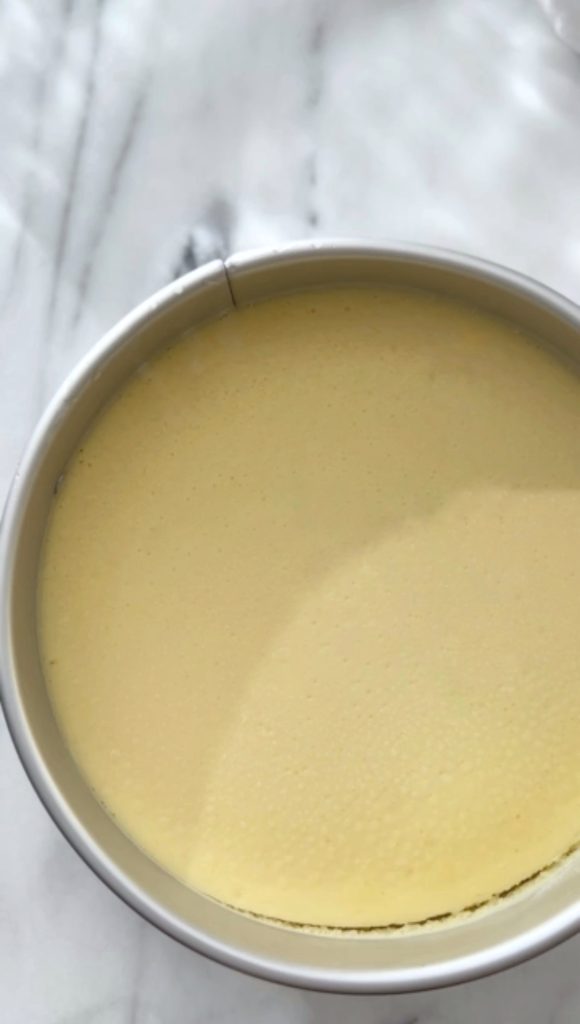
Pour batter into the prepared springform pan with the crust (photo 10). Fill a deep baking pan halfway with hot water and place it onto the bottom rack of the oven. Place the cheesecake on the top rack. Bake the cheesecake for 20 minutes, then reduce the oven temperature to 275°F. Bake for an additional 55 minutes. Cheesecake is done when you gently nudge the pan, and it slightly wobbles in the center. Allow it to cool for 15 minutes with the oven off and door left ajar (photo 11). Remove the cheesecake from the oven, evenly distribute the sour cream topping, and ensure a uniform layer (photo 12). Place the cheesecake back into the oven and bake for 5 minutes at 325°F. Once done, let the cheesecake rest in the switched-off oven, with the door slightly open, for a minimum of 30 minutes. Once the cheesecake reaches room temperature, cover it with plastic wrap and transfer it to the fridge to chill overnight.

Storing & Freezing Instructions for New York Cheesecake w/ Sour Cream Topping:
Leftover Cheesecake — Store leftover cheesecake in the refrigerator for about 5 days, provided it is in an airtight container.
Freezing Cheesecake — You can freeze cheesecake as a whole or in individual slices. If you’re freezing it as a whole cheesecake, first chill it in the fridge overnight. The next day, wrap the cheesecake in parchment paper, followed by a layer of foil, and place it into the freezer. This double wrapping should keep the cheesecake safe from freezer burn.
To freeze the cheesecake as slices, chill the cheesecake overnight in the fridge. The next day, slice it, wrap each slice in parchment paper and foil, and store it in a resealable bag for up to 3 months.
Remember to label your cheesecake with its name and date so you can track its time in the freezer. To thaw, transfer it to the fridge and allow it to defrost overnight.

New York Cheesecake w/ Sour Cream Topping
Equipment
- 8" Springform pan
- Electric hand mixer or stand mixer
- Food processor , optional
- Deep baking pan , water bath
Ingredients
Crust —
- 300 g graham cracker crumbs (19 sheets)
- 1½ tbsp light brown sugar
- 6 tbsp unsalted butter melted
- ⅛ tsp salt
Cheesecake Filliing —
- 678 g (3 – 8oz. blocks) full-fat cream cheese room temperature
- 3 large eggs room temperature
- 150 g sour cream room temperature
- 300 g granulated sugar
- 2 tsp vanilla extract
- ¼ tsp salt
- 1 tbsp cornstarch
- 1 tbsp lemon juice
Sour Cream Topping —
- 200 g (1 cup) sour cream
- 40 g powdered sugar
Instructions
Crust —
- Preheat the oven to 325°F. Wrap an 8-inch springform pan tightly with two layers of foil, ensuring no open seams on any of the sides.
- Next, use a food processor to grind graham crackers into a fine crumb. Pour the crumbs into a medium-sized bowl. Whisk together with brown sugar and salt. Add melted butter and mix until combined. Pour the crumbs into the prepared springform pan. Using the bottom of a small glass cup or a metal measuring cup, tamp down onto the crumbs, creating an even layer. Chill the crust in the fridge while you prepare the cheesecake batter.
Cheesecake Filling —
- In the bowl of a standing mixer fitted with the paddle attachment, beat softened cream cheese and sugar until smooth and creamy for a few minutes, on low, ensuring no lumps. Scrape the sides and bottom of the bowl to ensure it's mixed thoroughly. Next, add vanilla extract, salt, lemon juice, and cornstarch. Continue to beat on low until combined. Next, add eggs one at a time and gently mix on low. Fold in the sour cream, ensuring not to over mix the batter.
- Pour batter into the prepared springform pan with the crust. Fill a deep baking pan halfway with hot water and place it onto the bottom rack of the oven. Place the cheesecake on the top rack. Bake the cheesecake for 20 minutes, then reduce the oven temperature to 275°F. Bake for an additional 55 minutes.
- Cheesecake is done when you gently nudge the pan, and it slightly wobbles in the center. Allow it to cool for 15 minutes with the oven door left ajar. Remove the cheesecake from the oven, evenly distribute the sour cream topping, and ensure a uniform layer. Place the cheesecake back into the oven and bake for 5 minutes at 325°F. Once done, let the cheesecake rest in the switched-off oven, with the door slightly open, for a minimum of 30 minutes. Once the cheesecake reaches room temperature, cover it with plastic wrap and transfer it to the fridge to chill overnight.
- When ready to serve, use a small paring knife to gently loosen the sides of the cheesecake and release the springform pan, transfer the cheesecake to a plate, decorate, slice, and serve.


Leave a Reply