
For those of you who love tiramisu, you’ll love this recipe! The process is simple and doesn’t involve any baking. This tiramisu starts with traditional Savoiardi ladyfingers soaked in espresso – and, importantly, Grand Marnier. Next, it’s layered with a rich and creamy mascarpone cream. Finally, it’s topped with a generous dusting of cocoa. But fear not for those concerned about the safety of eating raw eggs, for the egg yolks are heated to the optimal temperature of 160℉ to ensure it’s safe to consume. All in all, it’s undeniably the perfect dessert you’ll want to make again and again!

Ingredients You’ll Need & Why It Works:
Brewed Espresso: Tiramisu gets its rich, intense flavor from the addition of espresso. If you’re worried about the caffeine content, don’t fret! You can easily swap out regular espresso for decaf or a half-caffeine version without sacrificing flavor. I’ve made both versions and believe me, there’s no discernible difference in taste, only in caffeine levels. Just be sure to use high-quality coffee beans for the best results.
Grand Marnier: Grand Marnier, a French orange cognac liqueur, is the perfect complement to our cocoa and coffee, creating an ideal blend of citrus and chocolate flavors. However, if you don’t prefer to use Grand Marnier, other options work just as well, such as Marsala wine, dark rum, Bailey’s, or Kahlua. Keep in mind that the alcohol is optional.
Italian Ladyfingers: Savoiardi, the classic Italian ladyfingers, are light, slightly sweet, and relatively dry when eaten alone. But when paired with the intense coffee and rich mascarpone, they transform into a cake-like sponge. Ladyfingers are an essential ingredient for this recipe, so you have the option to make them from scratch, purchase them from your local supermarket, Italian markets, or online. I used a 7oz (200g) pack of ladyfingers for this recipe, which I cut to fit the container.
Egg Yolks: This recipe uses egg yolks to impart a rich, buttery flavor and creamy texture to the mascarpone cream. While many tiramisu recipes incorporate raw eggs, this recipe opts for a safer alternative by gently heating the egg yolks through the double boiler method; once the internal temperature reaches 160℉, the egg yolks are safe to consume.
Mascarpone: Mascarpone is a type of Italian cream cheese that is smoother in texture and milder in taste. When choosing a mascarpone, check the container for ingredients such as pasteurized cream, milk, and citric acid. After spending countless hours experimenting with various mascarpone brands, I’ve discovered a few things that you should consider when procuring your mascarpone:
- The viscosity of mascarpone can vary depending on the brand. Some may be too runny, making it difficult to whip into a thick consistency. This usually causes you to accidentally over-whip your mascarpone, resulting in curdling. On the other hand, using a high-quality, thick mascarpone will make it easier to whisk and require less time to achieve the desired texture. A few of my favorite brands are Galbani and BelGioioso, as they have a thick, velvety, creamy texture ideal for tiramisu.
- When using mascarpone, ensure it’s cold and straight from the fridge.
Superfine Sugar: Superfine sugar, also referred to as caster sugar, castor sugar, baker’s sugar, or ultrafine sugar, is a type of sugar with finer granules than regular granulated sugar. In this recipe, its use ensures that the sugar quickly dissolves into the egg yolk mixture without leaving any graininess.
Heavy Whipping Cream: This tiramisu recipe takes a different approach than other recipes by using heavy whipping cream instead of the usual egg whites. Heavy whipping cream typically comprises 36% to 40% milk fat. The high-fat content makes it excellent for whipping and aerating into a luxuriously thick cream that adds extra creaminess and volume to the mascarpone cream.
Vanilla Extract: High-quality vanilla extract complements the different flavors in tiramisu.
Cocoa Powder: Dutch-processed cocoa powder is treated with a mild alkali agent like baking soda or potassium carbonate to lower its acidity levels. As a result, it has a smoother, richer, and fuller-bodied flavor, making it ideal for this recipe. When selecting a cocoa powder, opt for one with higher fat content, at least 20% fat, and preferably 22/24. This cocoa powder will yield a more robust chocolate flavor in your tiramisu.

Tips for Making Classic Italian Tiramisu:
Chill Mixing Bowl & Beaters — It is essential to chill a mixing bowl and its beaters/whisk in the fridge for at least half an hour beforehand. The cold bowl and beaters will help you to achieve medium peaks quicker. Medium peaks should slightly curl at the tip of your whisk once you lift it. This process typically takes 6-8 minutes at medium speed.
Don’t Over soak — Dip the ladyfingers into the espresso thoroughly, ensuring that each side gets a quick soak for no more than 2 seconds. Be careful not to overdo it, as saturating the ladyfingers could compromise the cake’s structure and cause it to collapse.
Chill Overnight— The flavors will deepen and intensify as you allow the tiramisu to sit in the fridge overnight. At the same time, the ladyfingers will gradually soak up the moisture from the mascarpone cream and coffee and become softer. The longer you leave it to chill, the more the tiramisu will improve in taste and texture. In fact, after a few days in the fridge, the flavors and overall texture of the tiramisu will be even more delightful.
Additional Piping – You can add extra piping detail on top of the tiramisu to make it look more appealing. If you choose to pipe mascarpone cream on top, reserve about 1/3 of your mascarpone cream. If the mascarpone cream is too warm to pipe, pop it back into the fridge and chill it for 30 minutes. If the cream remains too soft for piping even after chilling, give it an extra whip for a few more minutes until it thickens to the desired consistency. Transfer the cream to a piping bag with your choice of piping tip. I used the large open star tip.
Make Ahead — This is an ideal dessert that requires no baking and can be prepared in advance. For the best results, prepare and make your tiramisu at least a day before you serve it.
Curdled vs. Non-Curdled Mascarpone:
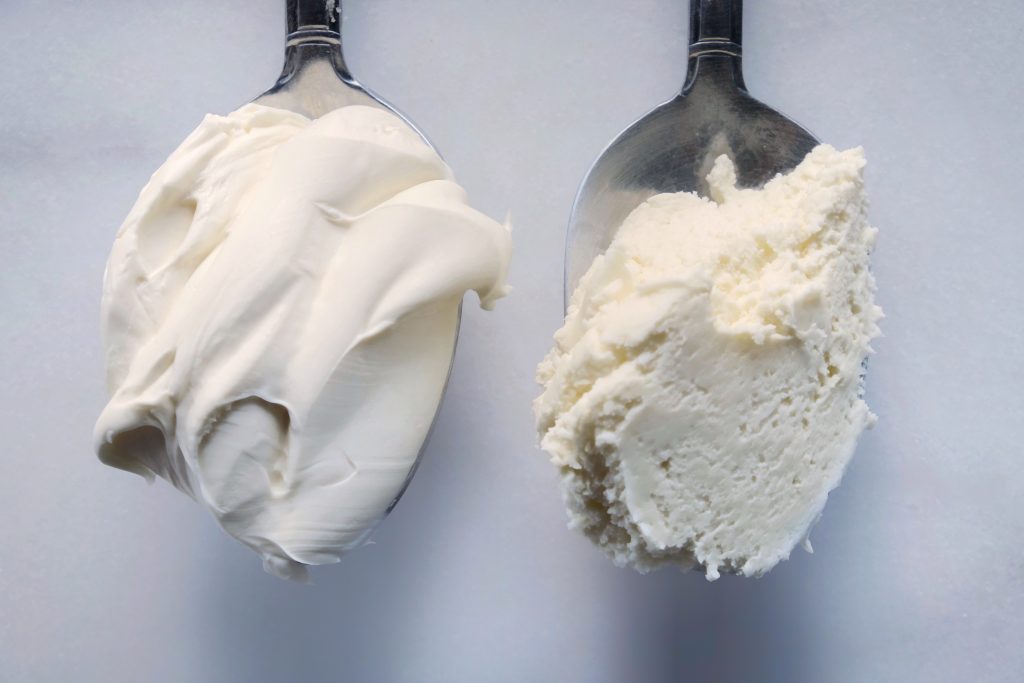
While testing different batches of tiramisu, I stumbled upon mascarpone that was inadvertently frozen during transit. This, unfortunately, resulted in many unfavorable experiences when I was beating the mascarpone, as it just kept getting increasingly grainier. When you freeze mascarpone, the liquids separate from the fat solids, resulting in a curdled texture. The above photo shows “good” mascarpone on the left and “curdled” mascarpone on the right. Notice the spoon on the right is grainy in texture, and the color has become more yellow than white. Compare this with the “good” spoon on the left, which is silky, smooth, and white in color. To ensure optimal quality and avoid undesirable outcomes, it’s best to open the lid of the mascarpone container to check for color and water condensation before buying. This will help ensure you don’t end up with curdled mascarpone.
Does coffee brewing methods make a difference?
Almost all tiramisu recipes recommend using espresso or very strong, robust coffee — but does it really make a difference? To find out, I conducted a little experiment. I brewed coffee using four different methods and used them to make four individual servings of tiramisu. Brewing methods were composed of instant, espresso, Nespresso, and Chemex. To keep things consistent, each tiramisu had the same amount of mascarpone cream, 55 ml of brewed coffee (using different brewing methods), 6 ml of Grand Marnier, and a dusting of cocoa powder. Although every brew method yielded adequate results, the espresso was the best choice. Mascarpone is a rich, creamy ingredient that works with strong, complimentary flavors. The espresso’s robust body punched the strongest when faced with such a rich and creamy profile. So, to answer whether coffee strength matters, the answer is a resounding yes.
Now, if an espresso machine is unavailable, there are few options for procuring strong coffee. One option is getting a Moka pot, which works well in producing strong coffee for a reasonable price. Another option is ordering espresso from your favorite local coffee house. Lastly, you can mix espresso powder with water to make a robust coffee in a pinch.


Storing & Freezing Instructions for Classic Italian Tiramisu:
Storage — Tiramisu can remain fresh for 4-5 days if it is covered and stored in the fridge.
To Freeze Tiramisu — I have yet to test whether tiramisu freezes well, but it’s best to savor it while it’s still fresh.


Recipe Notes:
Tiramisu Size —I used a small rectangular glass container measuring 11.06 x 7.4 x 3.15 inches (1.5L) for this recipe, but you can also opt to make 4-6 (4 oz.) individual servings in small glass containers.

Classic Italian Tiramisu
Equipment
- Electric hand mixer or stand mixer
- 3 Mixing medium bowls
- Glass baking dish (1.5L) , see recipe notes section
- Saucepan used as a double boiler
- Digital food thermometer
Ingredients
- 180 ml espresso or strong coffee cooled
- 25 ml Grand Marnier
- 22 Savoiardi ladyfingers cut to fit container
- 4 large egg yolks
- 16 oz mascarpone cold
- 120 g superfine sugar
- 220 ml heavy whipping cream cold
- 1 tsp vanilla extract
- unsweetened Dutched cocoa powder for dusting
Instructions
- Brew espresso. While the espresso cools, place a mixing bowl and its beaters into the fridge to chill for at least 30 minutes. This is for the whipped cream later.
- Fill a saucepan with about 1/2 cup of warm water. Using the double boiler method, place a heat-safe bowl over the top of the saucepan, ensuring the bottom doesn't touch the water. On medium-low heat, add egg yolks and superfine sugar. Whisk continuously until the egg yolk mixture turns a pale yellow and reaches an internal temperature of 160°F. Carefully remove the bowl from the heat and continue to whisk for another few minutes to allow it to begin to cool down. The mixture will become thicker as you whisk.
- In a separate mixing bowl, add the cold mascarpone and vanilla extract. Using a hand or stand mixer, beat for a few minutes until creamy. Next, add egg yolk mixture and whisk on medium speed for 3-5 minutes until thick and creamy. Be careful not to overbeat the mascarpone cream, or it'll curdle. Set aside.
- Remove the mixing bowl and beaters from the fridge. Pour cold, heavy whipping cream into the bowl and whisk until medium peaks. This will take about 6-8 minutes at medium speed. Be careful not to over whip, or the cream will quickly become grainy. Using a rubber spatula, add to the mascarpone mixture. Gently fold the cream until thoroughly combined.
- Cut ladyfingers to fit the container. Pour Grand Marnier into cooled espresso or strong coffee. Stir to combine.
- Spread a thin layer of mascarpone cream onto the bottom of the container, making sure it is even. Dip each ladyfinger into the espresso on both sides for about 2 seconds and place it onto the bottom of the container (side by side). Pour half of the mascarpone cream onto the first set of ladyfingers and spread it evenly. Repeat this process once more. Smooth out the top layer of mascarpone cream. If piping cream on top of the tiramisu, see the tips section for instructions. Cover the container and place it in the fridge to chill overnight.
- About one hour before the tiramisu is to be served, dust it generously with cocoa powder. Place the tiramisu back in the fridge so the cocoa powder can set. Finally, when you are ready to serve, slice it up and enjoy!


Leave a Reply